

Sonal Dinusha Makes His Mark on the International Stage
By Manas Patil

Sonal Dinusha became the first Sri Lankan to score three hundreds in a Test series while batting at No.6 or lower at the end of the recent Test series versus India. He also became only the third batter with twin hundreds in a Test match where their team was asked to follow-on, joining an elite list that previously only had Vijay Hazare and Andy Flower.
Dinusha scored 236 runs in the 2nd Test alone, facing 426 deliveries, while staying unbeaten in his second inning which proved to be a match-saving grind. Prior to this series against India, Dinusha had played just 3 Test matches with 92 being his highest score, which came against the West Indies. His First Class numbers had been promising though, where he had an impressive average of 48.44 after playing 70 matches.
He was not just the highest run scorer of this series, scoring 420 runs at an average of 140 but he also played the most number of balls (722 balls) in this series.
What really stood out was the level of maturity shown with a great understanding of his own game. His shot selection, ability to spend time at the crease and his game awareness was impressive.
Building the Innings
A No.6 batter is expected to have the ability to bat in multiple gears, as he has to bat with the tailenders. It was the same with Sonal; he had to bat mostly with the tail, to such an extent that 62.3% of balls he faced in this series were with tailenders (No. 8-11 batting position) at the non-striker’s end.
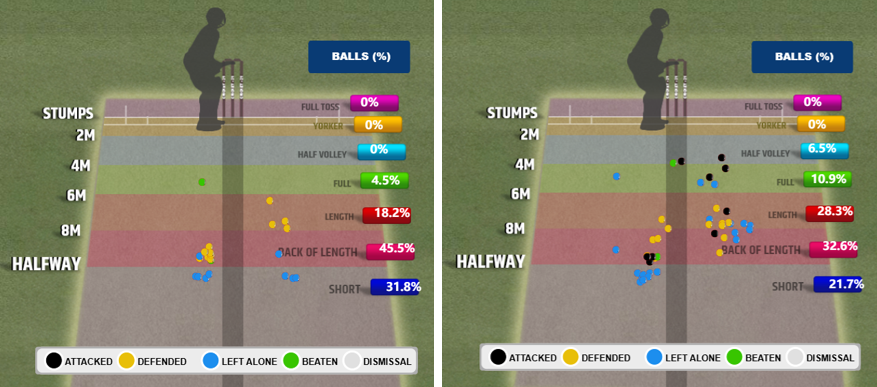
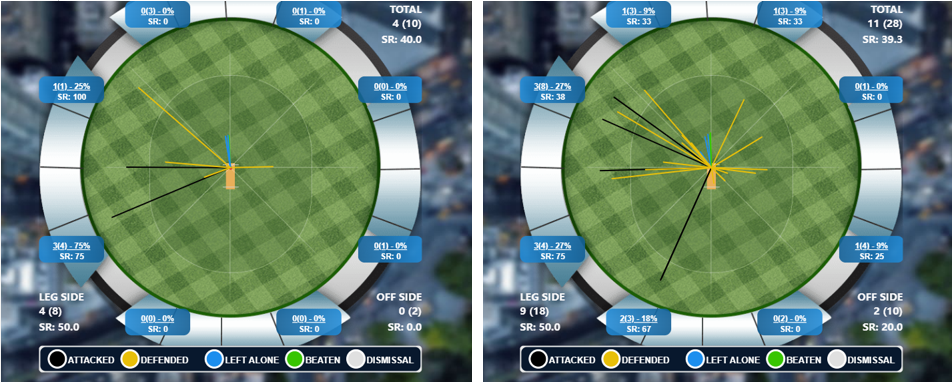
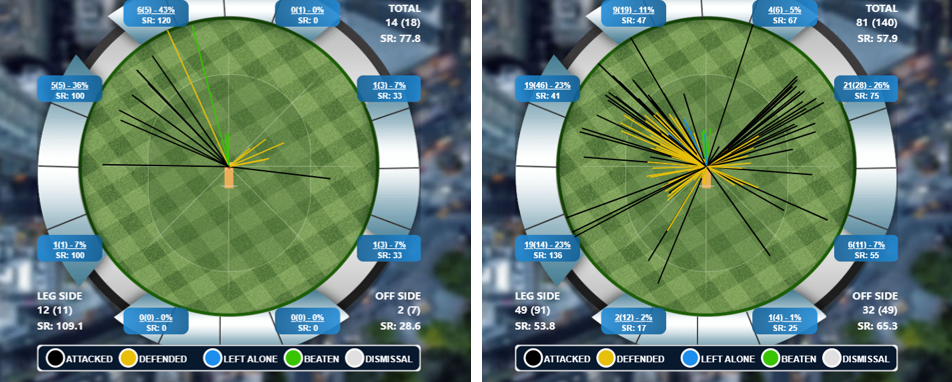
His 133* in the 3rd inning of the 2nd Test displayed a pattern where his attacking shots increased gradually, after his first 60 balls against pacers and after 30 balls against spinners. This suggests he was first looking to spend time on the wicket before playing the attacking strokes.
Improved Shot Selection
In his last 4 Test innings before coming into this India series, Dinusha’s control % on the flick, leg glance, square cut and pull shots against pace are 33.3, 46.2, 53.8 and 57.1 percent respectively.
Not that he worked on it for this series, but he found a way to address this issue, playing just two square cuts in the entire series and ducked (or left) 76.6% of bouncers bowled to him by the Indian pacers.
Against spinners, conventional sweep shot was his most productive shot, scoring 23.8% of his runs through it. But the thing which stood out was, out of the 71 sweep shot attempts, only 11 were against Manav Suthar (only 6.1% of the deliveries faced), compared to 21 against Ravindra Jadeja (11.1%) and 25 against Saransh Jain (22.9%). This displayed his ability to identify the threat level of sweep shot against a bowler who gets extra bounce.
The Sweep Shot
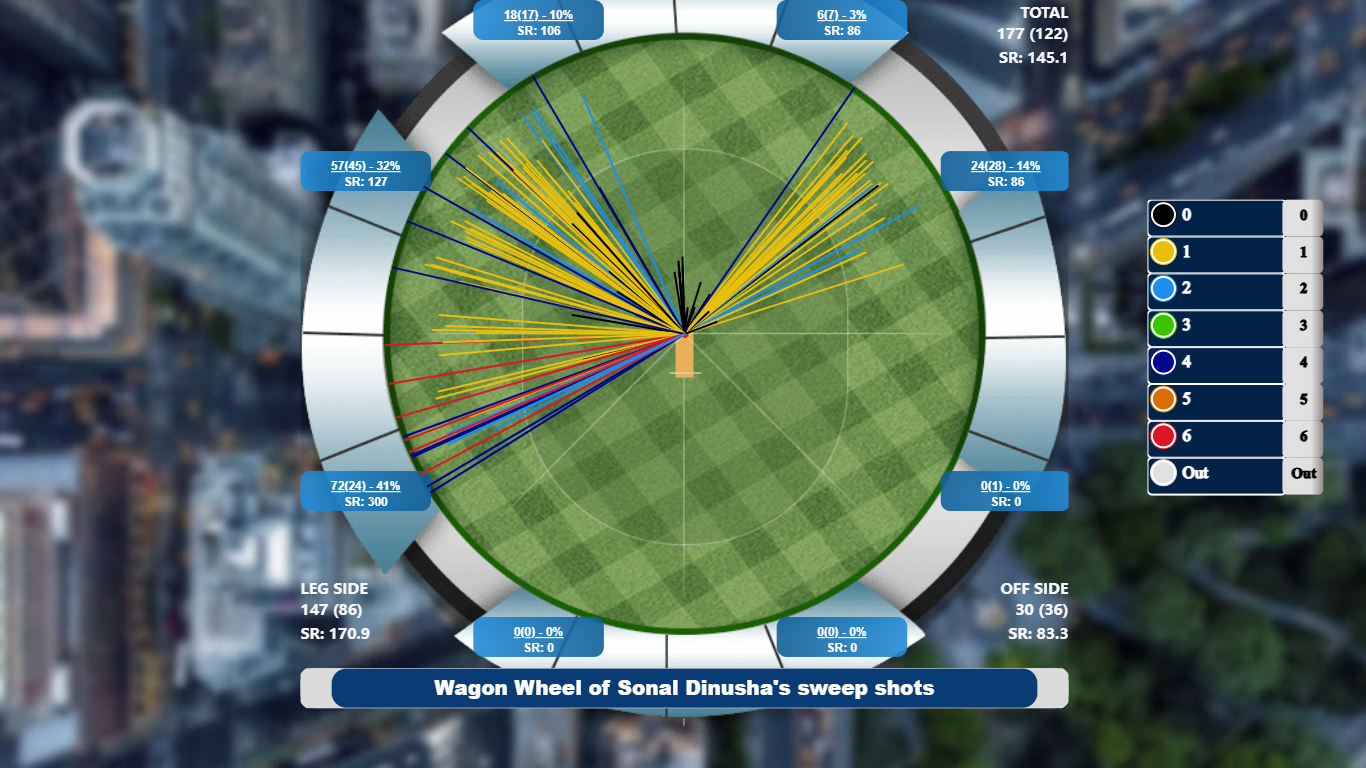
Dinusha scored nearly 177 runs through all forms of sweep shots, the most by a batter in a Test series. Out of the 122 attempts of the sweeps, 58% were conventional sweep shots. His impressive 85.9% control on those sweep shots accounts for his perfect technique while executing it.

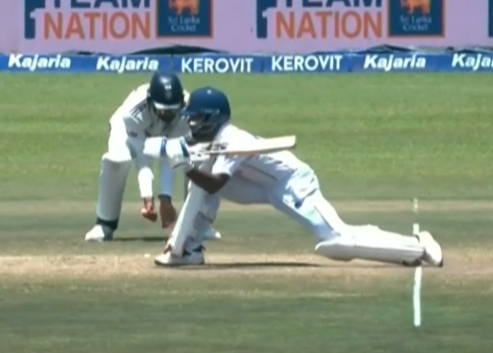
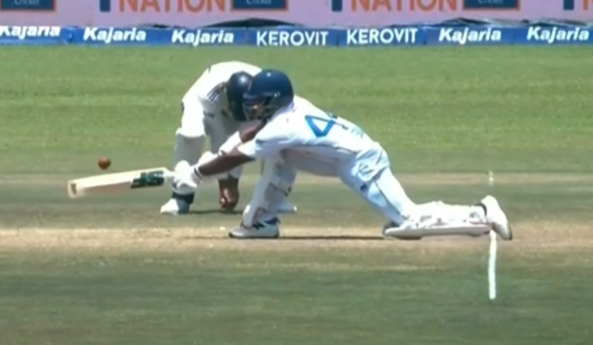
We can breakdown his sweep shot into three components:
-
High Backlift to generate bat speed and power on the shot.
-
Head over the front leg to track the ball closely and maintain balance.
-
Extended arms at contact to meet the ball in front of the body and maintain control.
The line of attack
Nearly 54% of his sweep shot runs came from outside the off-stump line.
Nearly 47% of his reverse sweep shot runs also came from outside the off-stump line.
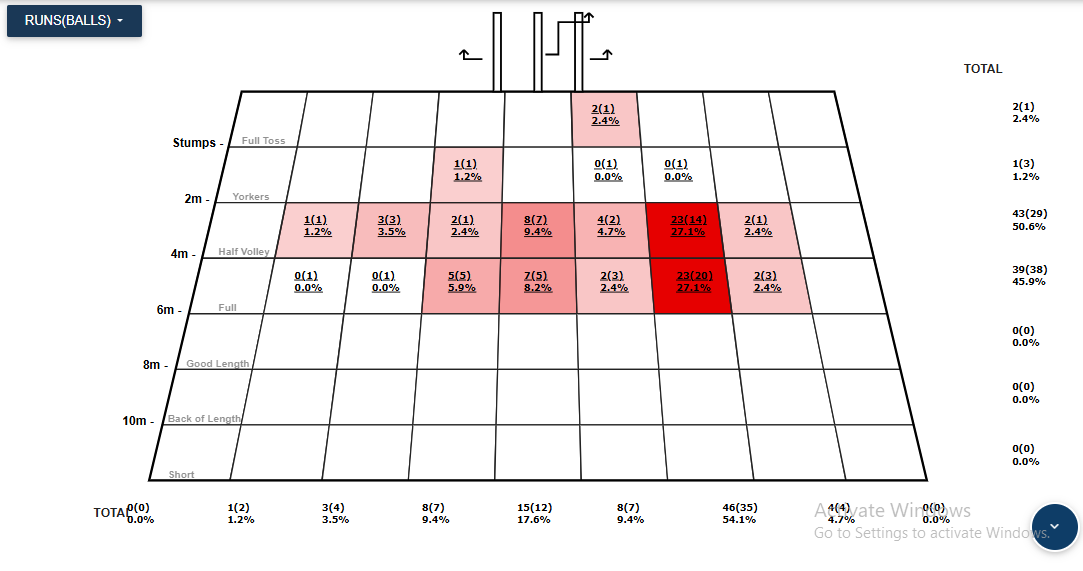
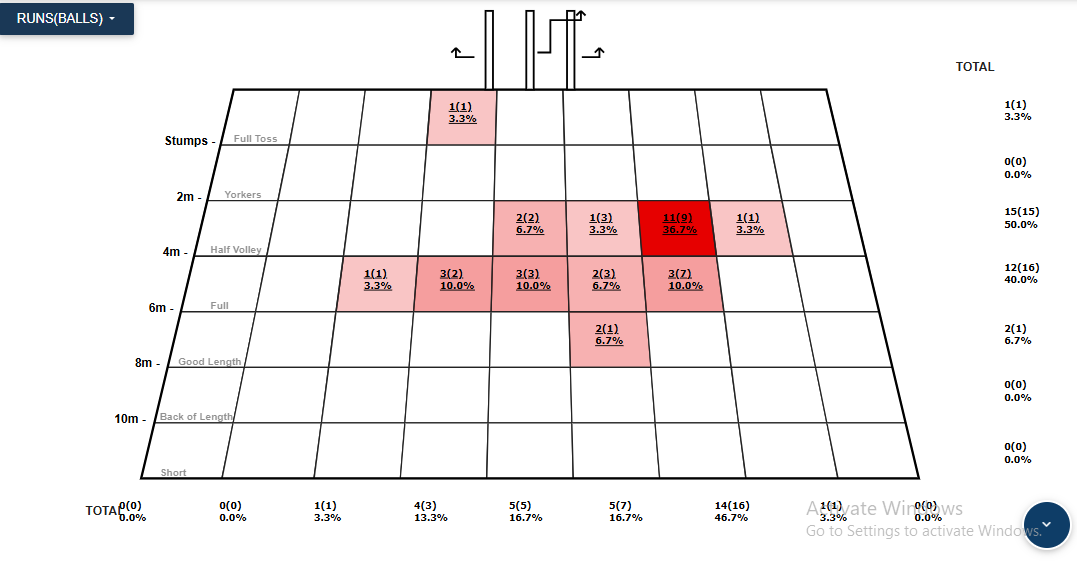
Range On Sweep Shots
He employs four different forms of sweep shot: conventional, paddle, slog and reverse sweep.
His range is remarkable, with the first three covering from fine leg to cover, while the reverse sweep spans third man to deep point.
Countering the Bouncer Ploy
In his last 5 innings before this series, his control percentage on short-pitched deliveries was just 63%, where his attacking shot percentage was nearly 26% and he left just 7% of those deliveries.
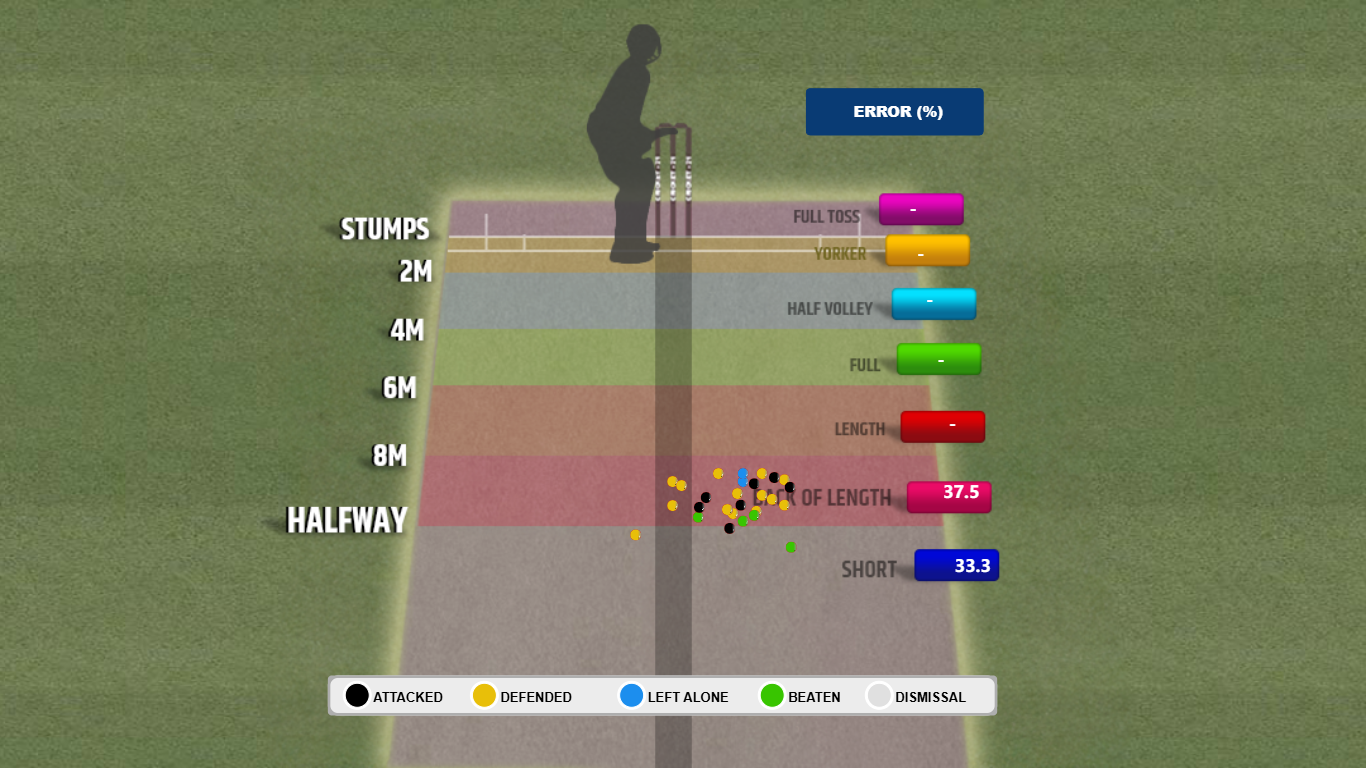
Indian pace bowlers used the short ball tactic against him in the 1st Test; out of those 16 deliveries, he left 4 alone and pulled 5 of them, while his control percentage was just 68.8% on these deliveries.
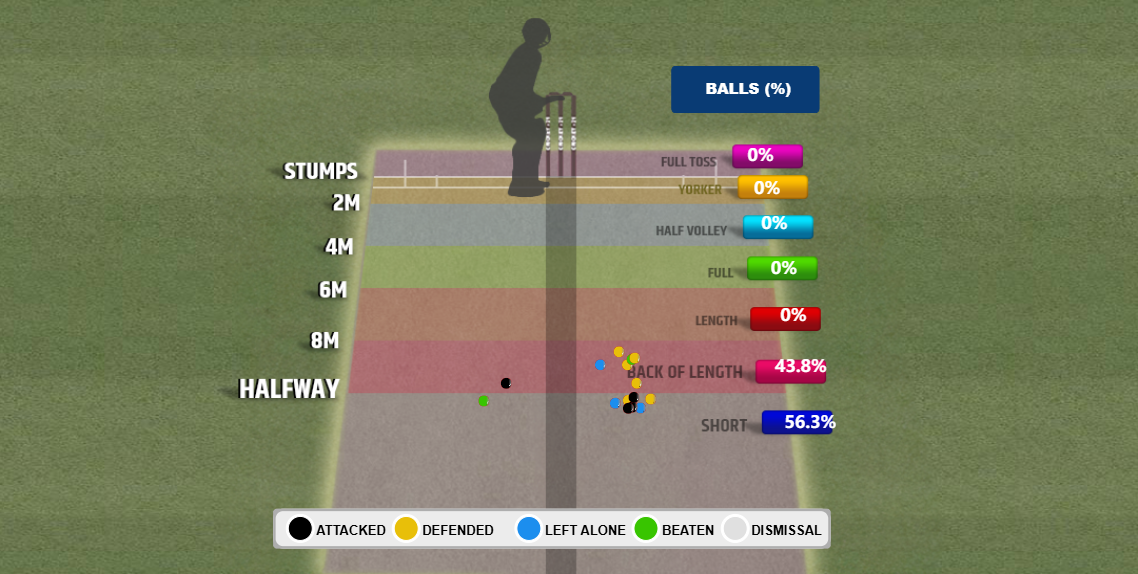
His response in the 2nd Test was markedly different.
What changed in the 2nd Test was the number of times he ducked (or left) and his control while playing the pull shot.
Considering his poor control on short-pitched deliveries, Indian bowlers increased the usage of this tactic. They bowled nearly 56 short-pitched deliveries, he ducked (or left) 25 (44.6%) and pulled just 6 (7%) of them.
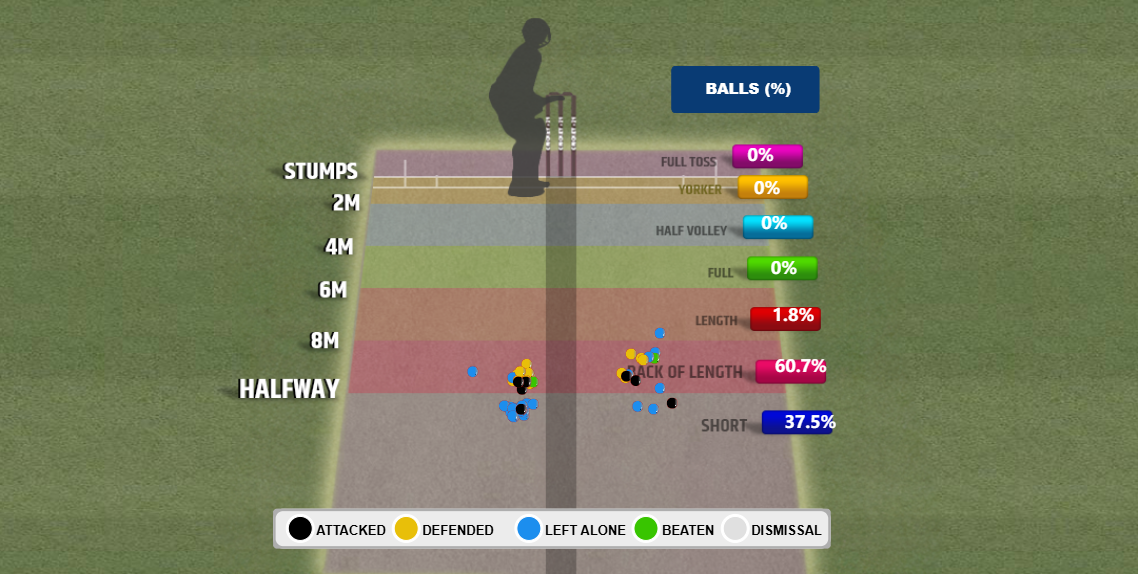
This result was striking. His control percentage on these deliveries rose to 94.6%. Rather than trying to counter this with a pull shot, he reduced the risk by becoming more selective about when to attack.
These four quality innings were not about his stroke play but his ability to pace the inning and understand the game situation. His shot selection, sweeping range, and ability to counter the opposition plans in between innings was remarkable to see. These early signs are suggesting that Sri Lanka may have unearthed a batter who can go a long way.