

Joe Root & the LBW: A Growing Trend
By Manas Patil

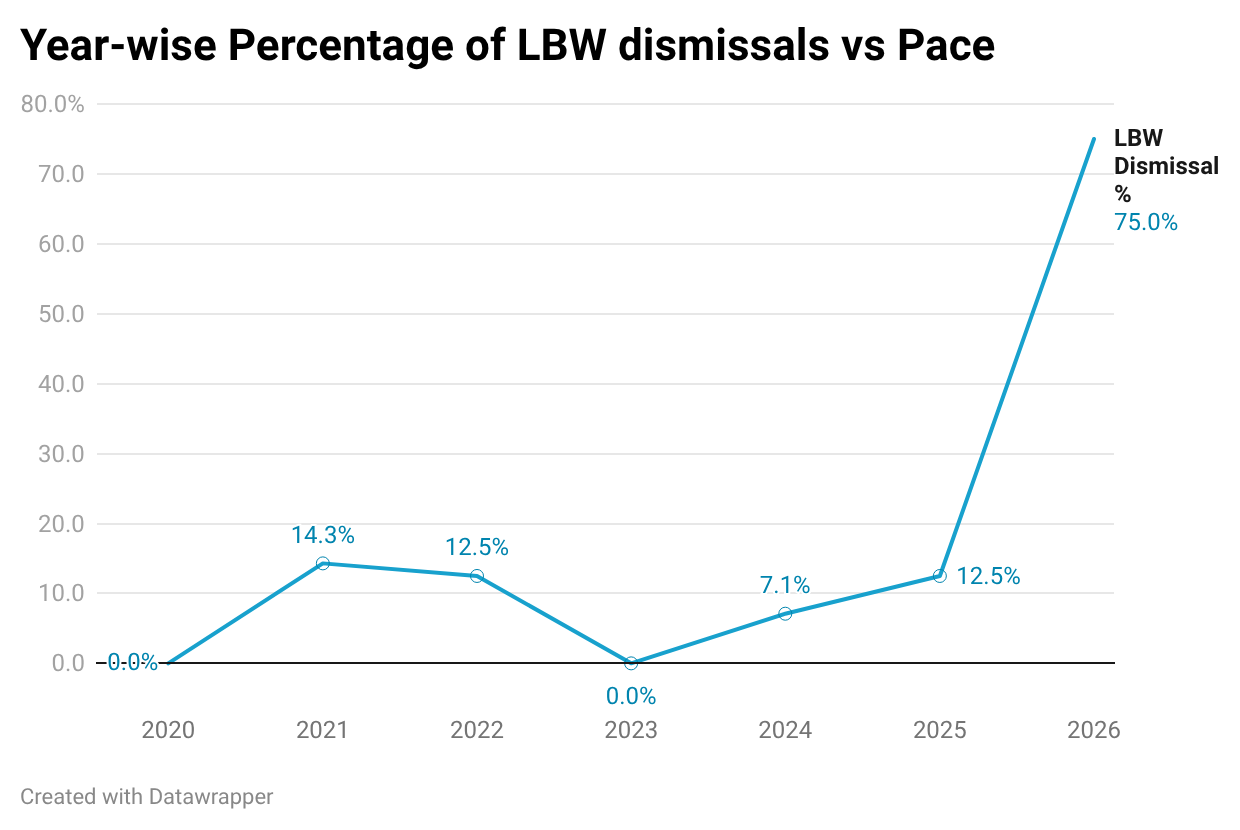
A batter with 14,278 runs at an average of 50.45, with 41 hundreds, Joe Root couldn’t finish the home test summer with a century. But the major talking point was not his failure to score a hundred, but more about a mode of dismissal which troubled him. Joe Root has averaged 37.2 in his last 11 innings. In those 11 innings, 8 of his dismissals have been LBW, with the wicketkeeper standing up to the stumps on four occasions.
This trend has emerged in recent times in the conditions that aid pace bowlers, where the keeper stands up to the stumps against 75-80mph bowling. The idea being to pin batters inside the crease, bringing all forms of dismissals into play.
Opponents Exposing His Technical Deficiency
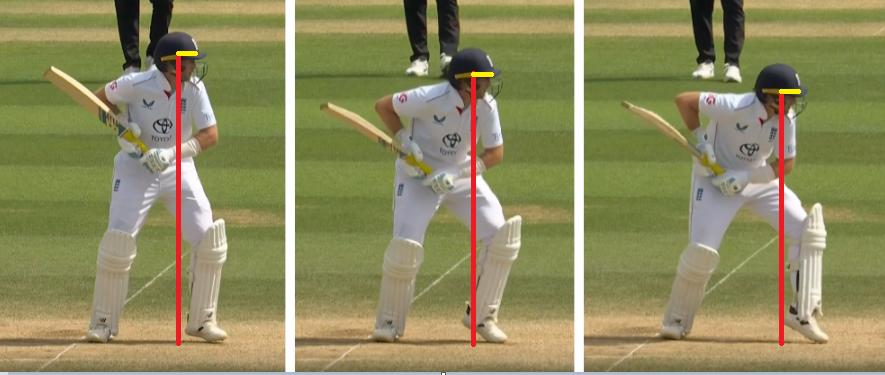
Root plays with a very upright side-on stance and back-across trigger movement, followed with a forward press before going forward or backward. Due to the smaller base and upright stance his centre of gravity stays higher than other batters.
As a result, it starts to get lower with his trigger movement, with his head (heaviest part of body) not just moving vertically down but even laterally towards his right. This causes his head to fall and the front foot goes across which is a result of the body trying to attain balance.
Playing Across the Line from Off Stump
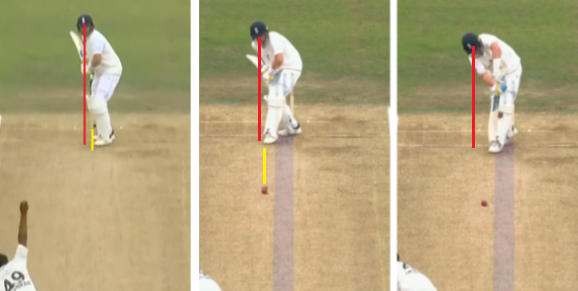
Post back and across trigger when his backfoot finishes close to off stump, head outside off stump resulting in his front foot moving across. This exposes his front pad and restricts his bat path on seaming in deliveries.
Moving Towards Leg Stump
Whenever Root moves his backfoot towards leg stump (like from middle to middle-leg) instead of moving across in his trigger movement, his head falls outside off. As a result, front foot moves across which makes him susceptible to LBW dismissal.
When the Keeper Comes Up
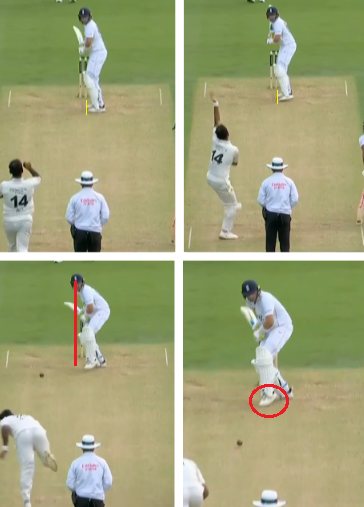
The wicketkeeper standing up to the stumps has been a tactic that has emerged in recent times. It started with the Ashes 25-26 when Australia used it against England with Alex Carey standing up to the stumps against the likes of Michael Neser and Scott Boland. The idea was to pin the batters inside the crease and bring stumps into the play.
This tactic has increased the demand for a 75-80 mph skillful pace bowler. Batters have to not just adjust with the difference in pace from both ends but also with keeper up to the stumps from one end they need to constantly re-adjust their stance and guard.
Many batters like to step out or come forward against pacers. Root also likes to come forward to negate the movement and keep LBW dismissal out of the picture, but with the keeper standing up to the stumps it becomes a very risky option. Out of the 8 LBW dismissals, 4 have come with the keeper standing up to the stumps.
England’s Seaming Summer

One thing to consider is the nature of wickets. The last two series in England have registered the lowest batting average across both teams since Ashes 2023.
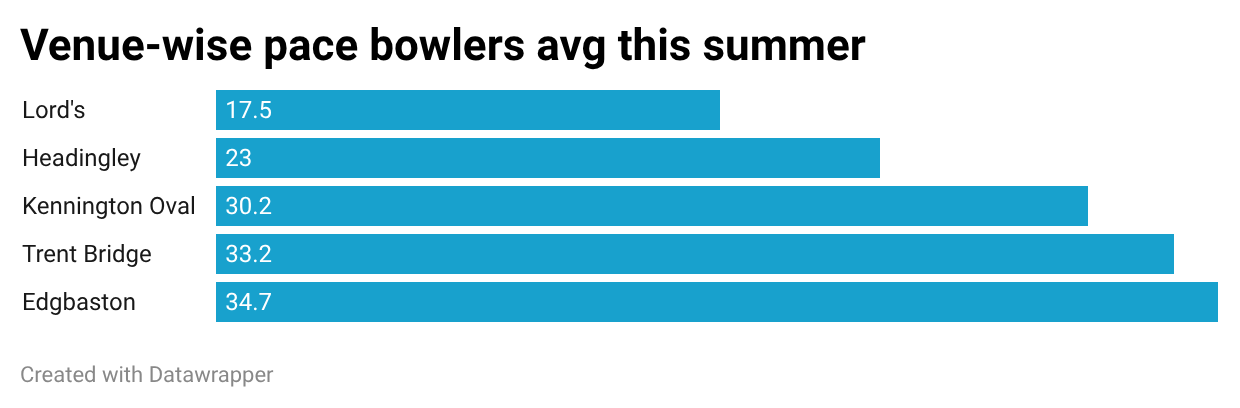
In this year’s summer, two games were played at Lord’s, where we saw some extravagant seam movement and uneven bounce. In those two games, pacers averaged 17.5 at a strike rate of nearly 30.
Another factor has been the rise of wobble seam exponent pacers in every team. Facing wobble seam on seaming wickets makes it even more difficult for batters, as they don’t get any clue from the wrist or seam position of the ball where the ball is likely to move. This uncertainty makes it tougher for batters to face wobble seam deliveries.
Change in Dukes Ball
After the second Test, Root pointed towards a possible change in the Dukes ball this summer. He mentioned that the ball appears to be harder. As a batter, when you practice, it is cracking your bats more frequently. He also pointed out the possibility of increase in dents created by the ball on the wickets on impact.
Ball retaining its hardness and seam characteristics, could potentially explain the increase in seam movement this summer.
However, this is difficult to verify as ball batches, pitch conditions, weather and bowling quality can all influence movement.
Has Root found a way out?
In the 1st innings of the 3rd Test, Joe Root was once again dismissed LBW. In an attempt to counter the LBW dismissal he made a few adjustments. Firstly, he took a leg stump guard when keeper was up to the stumps and moved back and back instead of across in his trigger movement. Secondly, when the wicketkeeper moved back, he changed his guard to middle-leg and started moving back and across again, but was eventually dismissed by Razaullah.
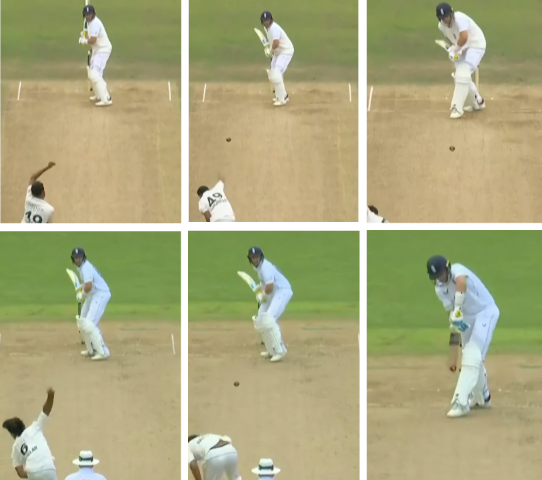
In the 2nd innings while chasing a target of 130, Root came to the crease with England at 2/2. In this inning he made a different change to his trigger movement, he started moving back and across only with his backfoot. Reducing this front leg movement in his trigger helped him in avoiding his front leg going across and giving himself extra time to adjust especially against incoming deliveries.
Root’s LBW dismissals are a combination of multiple factors. Opponents have identified a technical vulnerability and found ways to amplify it through tactics (wicketkeeper up to the stumps) and conditions. His attempt to make changes to his technique shows that Root has recognized it and is keen to find a solution to it. The real test would be whether these adjustments can hold up over a larger sample size and more upcoming series.