

Decoding Prince Yadav, India's Emerging Fast Bowler
By Manas Patil
The Making of Prince Yadav
Prince Yadav has emerged as one of India's promising young fast bowlers. He is a fine example of a bowler who has successfully transitioned from tennis ball cricket to professional cricket. Growing up, he played exclusively with a tennis ball and was introduced to leather ball cricket only at the age of 18. From there, he started learning the demands of bowling with a hard leather ball, which was a completely different challenge from bowling with a softer tennis ball.
His progress was interrupted in 2019 when he was handed a 2 year ban over age-fraud related issues. He then came into the spotlight during 2024 DPL (Delhi Premier League) while playing for Purani Delhi 6. His 13 wickets in 10 matches earned him a white-ball debut for Delhi. He made his T20 debut for Delhi in the 2024–25 Syed Mushtaq Ali Trophy against Uttar Pradesh, claiming the wickets of Nitish Rana and Sameer Rizvi just a day before the IPL 2025 Mega Auction. A day later, Lucknow Super Giants signed him for INR 30 lakh.
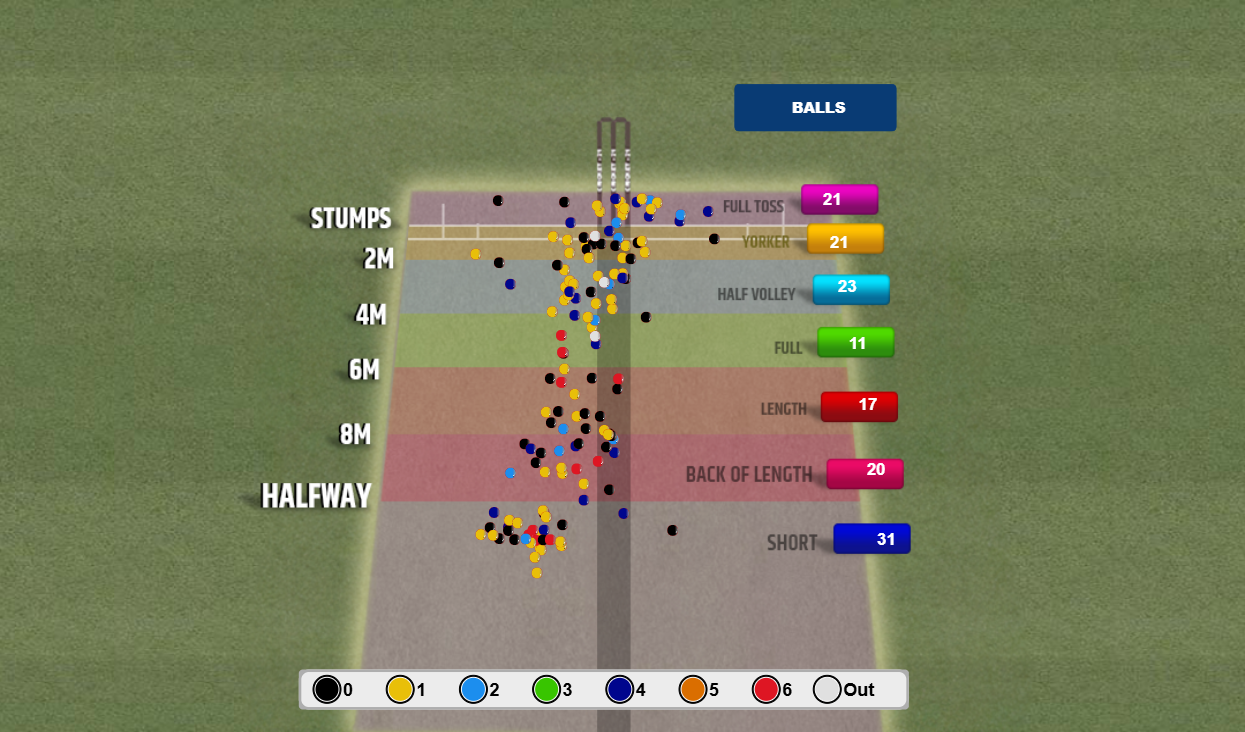
He played just six matches in IPL 2025, taking 3 wickets at an economy of 9.85. Despite the modest returns his potential was evident, batters were hurried through their shots due to his quick arm-speed and skiddy action. Another standout feature was his ability to execute yorkers with precision, he executed nearly half of his yorker attempts successfully.
The Challenge Ahead
In IPL 2025, Prince Yadav was used predominantly in middle and death overs, bowling 57.8%, 24.4% of his overs in those phases respectively. He bowled just four overs in powerplay, accounting for only 17.8% of his overs. So, clearly the next challenge was going to be his powerplay bowling with the new ball and hitting those right lengths.
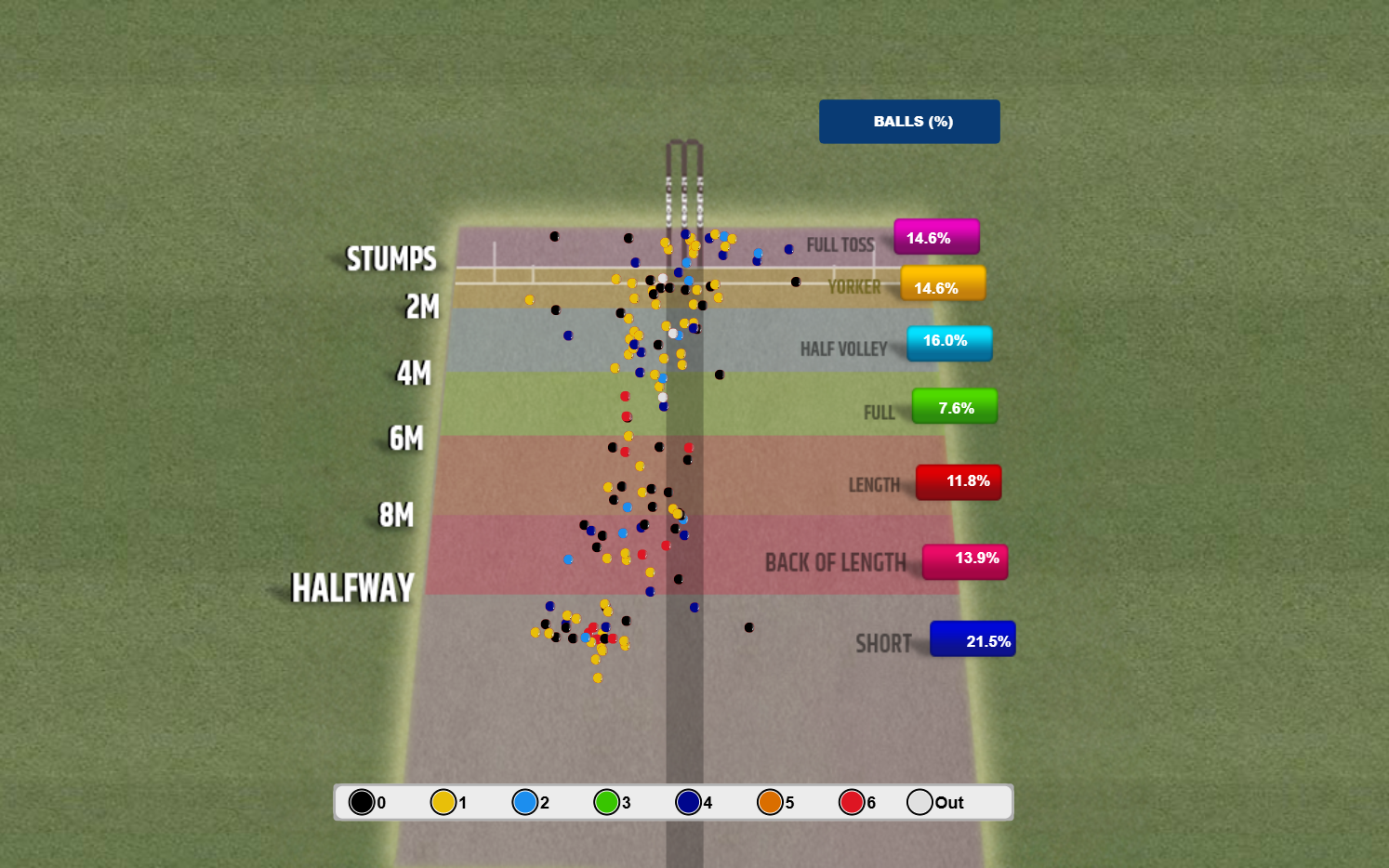
In IPL 2025, he bowled just 11.8% of deliveries on good length(6-8m) and 13.9% on back of length(8-10m). So, to be able to succeed and take wickets in powerplay, he needed to work on his ability to swing and seam the ball from right areas.
How Did He Respond?
The challenge was to be able to move the ball while consistently hitting right areas. Prince responded by adding an outswinger to his bowling arsenal and improving his consistency. The impact was evident in the very first game, where he dismissed Pathum Nissanka and Axar Patel with his outswing delivery in the powerplay, earning the captain's trust to bowl in powerplay regularly.
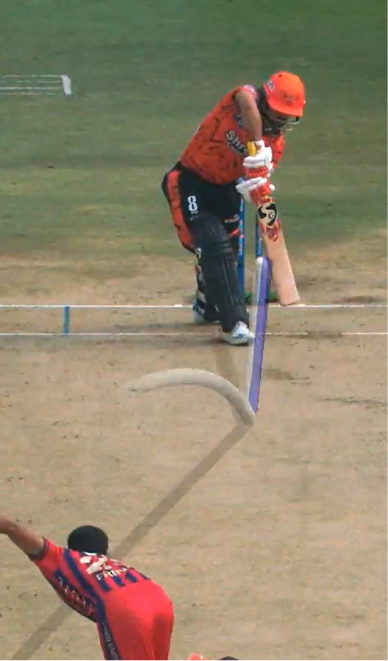
In the following game, he dismissed Ishan Kishan, and it was evident that it wasn't just the conventional swing causing problems to the batter, but the late swing and movement of the surface, which left them with minimal time to adjust.
As a result, nearly 36.5% of his overs came in powerplay, where he claimed 6 wickets at an economy rate of 8.7. More encouragingly, four out of those six dismissals were bowled, including the prized wicket of Virat Kohli, highlighting the effectiveness of his improved new-ball skills.
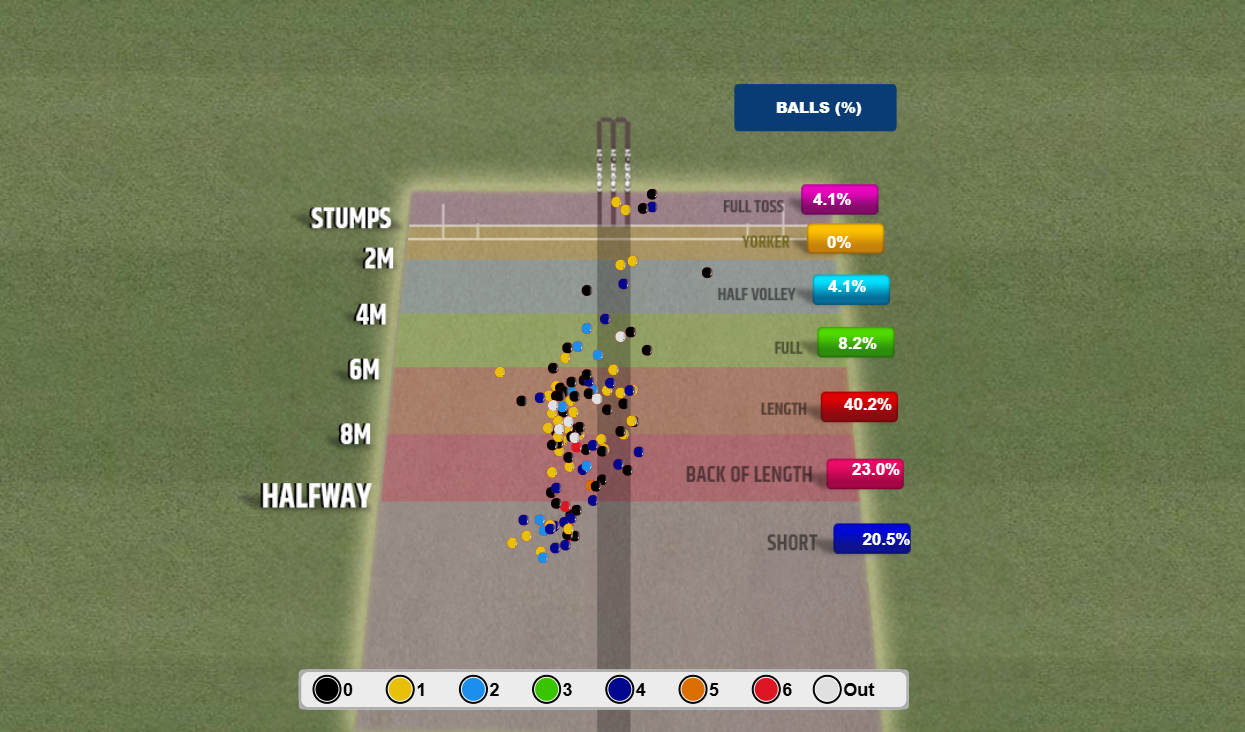
Possessing new-ball skills alone doesn't guarantee success if you can't move the ball from the right wicket-taking area. In his previous IPL season, he was not able to hit the good length area consistently. But in IPL 2026, nearly 40% of his powerplay deliveries were bowled at a good length(6-8m) and four of those six wickets came from that area only.
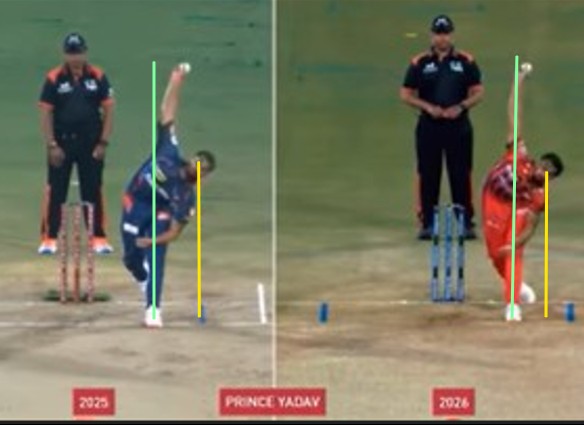
A comparison between his present bowling action and that from IPL 2025 reveals a noticeable change in his release mechanics. At release, his bowling arm is now much closer to the 12 'o clock position, helping prevent his head from falling towards the leg side. This improved alignment enables him to consistently hit his intended length.
Inside Prince Yadav's Bowling Mechanics
Prince Yadav is a front-on, hip-dominant bowler. A front-on bowler is one whose backfoot points towards the batter at the backfoot contact. As a hip-dominant (or a tendon driven) bowler, he relies heavily on tendon stiffness and runup momentum to generate pace.
He has a very rhythmic runup and repeatable action. There are several key attractors which stand out in his bowling action which we'll discuss.
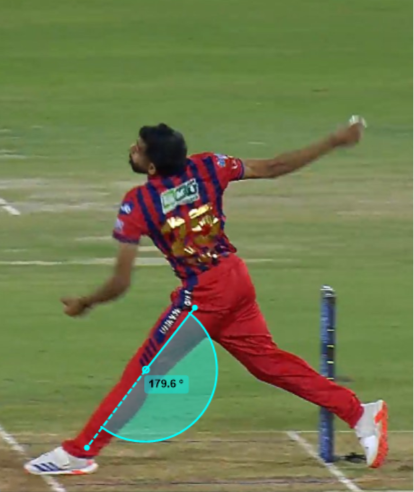
Stiff Backfoot Contact : Being a hip-dominant bowler, Prince relies heavily on efficiently transferring his run-up momentum. A stiff back-foot contact is therefore critical, as it minimizes energy leakage while allowing momentum to be transferred effectively through the kinetic chain. His heel does not touch the ground at back-foot contact, reducing ground contact time and enabling a quicker transition into front-foot contact.
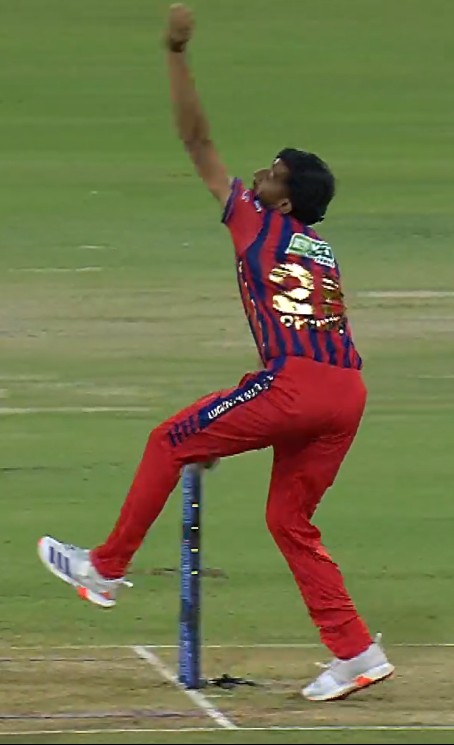
Non-Bowling Arm Extension : His extended non-bowling arm at back-foot contact plays an important role in both control and pace generation. It helps maintain body alignment and promotes faster rotation of the bowling arm, contributing to higher ball speed.
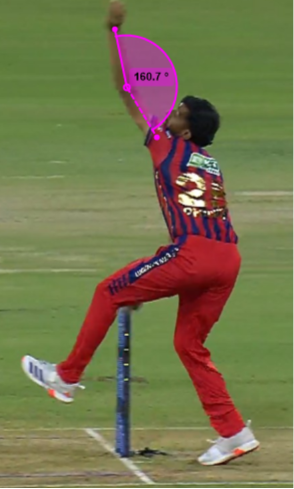
Braced Front Leg : Prince also lands with a well-braced front leg at front-foot contact. A firm front leg acts as a stable base, allowing the momentum generated during the run-up to be transferred efficiently into the upper body rather than being absorbed through the knee. This helps generate greater ball speed while maintaining balance through release. A braced front leg also ensures a higher release point which helps in extracting bounce from the surface.
Key Bowling Patterns
Slower bouncers : Nearly 75% of his pace-off deliveries are slower bouncers. While they've been effective against right-handers - economy of 8.2, left-handers have scored at 11.7 runs per over against them.
Prefers Over the wicket : He prefers to bowl Over the wicket, has bowled just 27 deliveries from round the wicket in T20s.
No LBW dismissal yet : Despite generating movement with the new ball, he is yet to register an LBW dismissal in T20 cricket.
Short Ball Usage : During the middle and death overs, nearly one in every four deliveries he bowls is a short ball (10 m+).
Conclusion
Prince Yadav has shown that he is more than just another skiddy fast bowler. His technical improvements, combined with a clear understanding of the T20 bowling, have already translated into better performances with the new ball. While there are still areas to develop, particularly his new-ball bowling and his ability to sustain his pace over longer spells in the ODI format, the early signs suggest he has the foundation to become a reliable fast bowler across all phases of the innings. His progress over the next few seasons will be an exciting one to follow.